
Internal Trash Chutes for Commercial & Industrial Buildings
Durable, code-compliant, and easy to maintain, at CHUTES International, our internal trash chutes are built to meet the demands of high-rise waste management. Engineered for longevity, safety, and easy use, our systems are trusted by apartment buildings, hospitals, hotels, dormitories, and other multi-story facilities across the country.
As with our internal linen chutes, our trash chutes are better looking, longer lasting, easier to clean, and require less maintenance. Our trash chutes are also outfitted with the only intake door on the market with both front and back stainless panels and skirts.
If you’re asking “What are commercial trash chutes, and which kind is best for my building?”—you’re in the right place.
Why Choose CHUTES International Internal Trash Chutes?
- 100% Stainless Steel Construction — resists corrosion and damage
- UL- and NFPA-Compliant — meets strict safety and fire-rating standards. Visit our free NFPA compliance chute fire prevention and control inspection protocol.
- Factory-Applied Sound Coating — minimizes noise across all levels
- Electric Interlock System (Optional) — enhances safety and door control
- Available in Multiple Sizes — including 24″, 28″, 30″, and 36″ diameters
- Fast Installation & Long-Term Reliability — designed to simplify building operations
From hospital-grade trash chute systems to solutions for condos and dormitories, our chutes can be customized to meet your building’s footprint and fire code.
Typical Trash Chute Assembly Components:
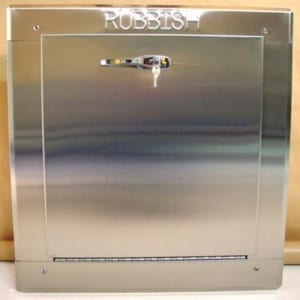
Trash Chute Door
Standard hand operated intake, noiseless, self-closing, bottom hinged, 1 1⁄2 hour, 250°, U.L. “B” labeled doors meet the standard of the New York City Material and Equipment acceptance Division. Available options include interlocking doors and hands-free operation.
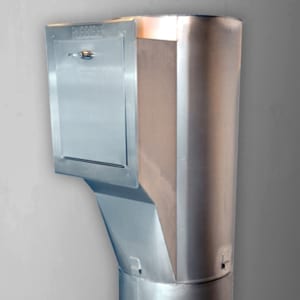
Trash Chute Section
Standard chute section for centralized handling of rubbish and debris. All materials are prefabricated to shop drawing specifications. Height expansion joints are provided. Chutes are made of impact and corrosion resistant plastic.
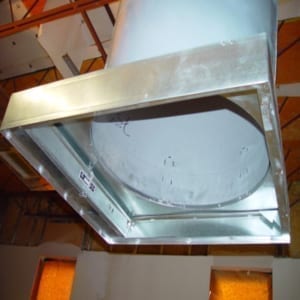
Accordion Discharge
Standard discharge on trash chutes. The damper is spring loaded and held open by a 165° fusible link assembly. In the event of fire, the link releases the accordion style slats, preventing the spread of fire into the chute.
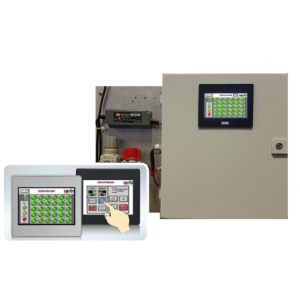
Smart System
The Smart System is a hands-free door system for our trash chutes that allows centralized, touch screen or remote monitoring of all the chute doors in your system for building personnel. Fully ADA-Compliant and includes service and lockout modes.
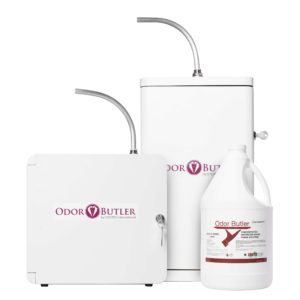
Odor Control
Odor Butler is our patented line of odor control products designed to prevent pests and mitigate unpleasant smells in your building’s trash room. Available in a variety of applications suited for both prevention and immediate treatment, the Odor Butler line ensures a simple and continuously effective solution at any scale.

Floor Retainer Flange
A Floor Retainer Flange is installed at the first floor of every chute. This is a twenty-two inch (22″) gauge galvanized sheet with a 24″ or 30″ flange under deck at penetration for retaining of fire stop material to help prevent spread at the base of the chute.
Trash Chute Features
Sound Insulation – To reduce noise, the product is factory sprayed on sound coating and isolator pads.
Electric Interlock Locking mechanism that locks out other chute doors, when one intake is in use.
Access Doors – A stainless steel door (15″x15″) is standard with ‘UL’ Label.
Pass-Thru Door – Located in the discharge room wall. Side hinged, 18″W x 18″H with thru-wall liner.
INTAKE DOOR SIZES
| CHUTE Ø | WIDTH | HEIGHT |
|---|---|---|
| 24″ | 15″ | 18″ |
| 28″ | 21″ | 18″ |
| 30″ | 21″ | 18″ |
| 36″ | 24″ | 24″ |
ACCORDION DISCHARGE SIZES
| CHUTE Ø | WIDTH | HEIGHT |
|---|---|---|
| 24″ | 28″ | 32″ |
| 28″ | 32″ | 37″ |
| 30″ | 34″ | 39″ |
| 36″ | 40″ | 46″ |
Frequently Asked Trash Chute Questions
Installation & Design
What are the benefits of installing a trash chute?
Trash chute systems improve cleanliness, convenience, and efficiency in multi-story buildings. Residents and staff can dispose of waste quickly without transporting bags through hallways or elevators. Properly designed systems also help reduce labor costs, improve sanitation, minimize odors, and enhance overall resident satisfaction.
How are trash chutes installed in a building?
Trash chutes are typically installed vertically through designated floor openings and enclosed within a fire-rated shaft. Intake doors are installed on each floor, leading to a discharge area or compactor room at the bottom. Installation requires coordination with structural, mechanical, electrical, and fire protection systems to ensure proper code compliance.
Can a trash chute be added to an existing building?
Yes. Existing buildings can often be retrofitted with a trash chute system depending on available space, building layout, and structural limitations.
What materials are trash chutes made from?
Most trash chutes are manufactured from aluminized steel, or stainless steel. Aluminized steel is commonly preferred for its durability, corrosion resistance, fire resistance, and ease of cleaning. Intake doors and discharge components are also available in heavy-duty steel construction for long-term performance.
What size trash chute is needed for my building?
Chute size depends on the building type, number of floors, occupancy, and expected waste volume. Common chute diameters are 24″, 30” and 36″. Larger residential buildings, hospitals, and high-occupancy facilities typically require larger chute diameters to accommodate increased waste generation.
Are trash chutes customizable for different building layouts?
Yes. Trash chute systems can be customized to fit a variety of building designs and operational needs. Options may include offset sections, custom intake door configurations, sorting systems for recycling, odor-control systems, smart monitoring technology, and specialized discharge arrangements.
Maintenance & Cleaning
What not to put in an interior trash chute?
Items that should never be placed into a trash chute include:
- Loose, unbagged trash
- Hot ashes or flammable materials
- Paints, chemicals, or hazardous waste
- Large furniture or bulky objects
- Construction debris (this debris goes into an exterior trash chute)
- Liquids
- Explosives or pressurized containers
- Sharp metal objects that may damage the chute
Improper disposal can damage the system, create safety hazards, and increase maintenance costs.
How often should I have my chute system cleaned?
Most residential and commercial chute systems should be professionally cleaned every 3 to 6 months, depending on building usage and occupancy levels. High-traffic properties may require more frequent cleanings to control odors, bacteria, grease buildup, and pests.
How much does it cost to clean trash chutes?
Cleaning costs vary based on building height, chute condition, accessibility, and service scope. Factors such as sanitizing treatments, odor-control applications, compactor cleaning, and grease removal may also affect pricing. Routine cleaning is generally far less expensive than emergency repairs or major restorations.
Why do I need to maintain my trash or linen chute system?
Routine maintenance helps extend equipment life, improve sanitation, reduce odors, prevent costly breakdowns, and maintain safe building operations. Proper maintenance also helps ensure fire doors, discharge systems, and safety devices function correctly and remain code compliant.
How often should trash chute doors be inspected?
Trash chute intake doors should be visually inspected regularly and professionally inspected at least annually, per 11.2.2 NFPA regulations. Frequent inspections help identify worn hardware, damaged latches, missing labels, improper closing, and fire-rating concerns before they become larger safety issues.
What are the signs a trash chute needs cleaning?
- Common warning signs include:
- Persistent odors
- Increased pest activity
- Grease or residue buildup
- Slow-moving debris
- Excessive noise during operation
- Visible staining around intake doors
- Resident complaints regarding sanitation
Can regular maintenance prevent odors in trash chutes?
Yes. Regular cleaning, sanitizing, and preventive maintenance significantly reduce odors. Proper ventilation, disinfecting treatments, and odor-control systems can also help maintain a cleaner and more pleasant environment for residents and staff.
Who is responsible for maintaining a trash chute system?
Responsibility typically falls on the property owner, property manager, facility management team, or building maintenance department. Professional chute service providers are commonly used for inspections, repairs, cleaning, and compliance support.
What happens if a trash chute is not properly maintained?
Poorly maintained chute systems can develop odors, pest infestations, corrosion, fire hazards, equipment failures, and sanitation issues. Neglected systems may also violate local building or fire codes, potentially resulting in fines, liability concerns, or operational disruptions.
Safety & Compliance
What safety features are included in modern trash chute systems?
Modern chute systems may include:
- Fire-rated intake doors
- Self-closing and self-latching doors
- Sprinkler systems
- Fusible links
- Automatic wash-down systems
- Odor-control systems
- Access control systems
- Sound-deadening insulation
- Smart monitoring technology
These features help improve sanitation, reduce risk, and enhance operational safety.
What building codes apply to trash chute systems?
Trash chute systems are generally governed by local building codes, fire codes, and standards such as:
- NFPA standards
- International Building Code (IBC)
- International Fire Code (IFC)
- Local municipal regulations
Requirements often address fire protection, ventilation, discharge rooms, intake door ratings, and maintenance practices.
How can property managers ensure chute compliance?
Property managers can maintain compliance by:
- Scheduling regular inspections
- Maintaining cleaning records
- Repairing damaged components promptly
- Ensuring fire doors operate properly
- Keeping discharge rooms clean
- Following manufacturer recommendations
- Working with qualified chute professionals
How can CHUTES help me stay in compliance?
CHUTES can assist with inspections, preventive maintenance programs, chute cleaning, repairs, modernization upgrades, code evaluations, and documentation support. Routine service helps identify issues early and keeps systems operating safely and efficiently.
Are trash chutes a fire hazard?
Maintenance is key. Stay Out of Trouble – and Out of the Hot Seat! Avoid citations, fines, and fire hazards by making sure your trash chute system is up to code with NFPA (National Fire Protection Association) regulations. According to NFPA guidelines, waste and linen chutes—including intake doors and transport systems—must be inspected and maintained at least once a year per the manufacturer’s instructions. Skip it, and you’re risking more than just a foul odor. We offer preventive chute maintenance & repairs, 24/7 emergency service calls, and replacement parts—everything you need to keep your chute system running safely and smoothly. Let us help you stay compliant, avoid costly fines, and keep your property protected.
Upgrades & Services
When should a trash chute system be repaired or replaced?
A chute system may require repair or replacement when it shows signs of:
- Severe corrosion
- Structural damage
- Frequent blockages
- Persistent odors
- Worn intake doors
- Non-compliant fire components
- Excessive downtime or repair costs
Older systems may benefit from modernization to improve safety, sanitation, and efficiency.
What upgrades are available for older trash chute systems?
Common upgrades include:
- New intake doors
- Stainless steel replacement sections
- Smart monitoring systems
- Sanitizing and odor-control systems
- Automatic cleaning systems
- Sound insulation
- Improved discharge equipment
- Recycling sorter systems
- Touchless door technology
Can trash chutes be retrofitted with sanitizing and/or odor-control systems?
Yes. Existing chute systems can often be upgraded with sanitizing, deodorizing equipment and/or odor-control systems.
Do trash chute systems require regular professional inspections?
Yes. Professional inspections are strongly recommended to identify wear, code deficiencies, fire safety concerns, and operational problems before they lead to system failures or costly repairs. Routine inspections also help document compliance efforts and extend equipment lifespan.
Designed for Your Property Type
Our internal trash chutes are ideal for:
- Apartments and Condominiums
- Hotels and Hospitality Venues
- University Dormitories
- Medical Centers and Hospitals
- Mixed-Use and High-Rise Buildings
No matter your building type, we provide layout recommendations and chute system specifications that suit your environment and occupancy load.
Safety, Code Compliance & Hygiene
All CHUTES International trash chutes are designed to meet local and national fire codes, including UL standards and NFPA guidelines. Optional electric interlocks restrict simultaneous door use for added safety.
We also offer chute odor control and sanitizing system integrations for hygiene-sensitive buildings like hospitals or residential towers.
Shop Our Chute, Trash Room & Common Area Odor Control Solutions (BUTTON)
Need Help Choosing the Right Trash Chute?
Whether you’re comparing chute sizes, fire code specs, or deciding on retrofit vs. new build, we can help.
Contact us today for product recommendations, estimates, or layout support.
Visit Our Internal Chutes Resource Center For More Information